Health and Safety Policy for Landscapers Hampstead
 This health and safety policy sets out the standards expected from Landscapers Hampstead in all outdoor maintenance, clearance, and waste-related activities. Our aim is to protect employees, clients, visitors, and members of the public while maintaining a professional and efficient service. Every task, from routine garden upkeep to rubbish removal and site tidying, is planned with safety in mind. We recognise that landscaping work can involve manual handling, machinery, weather exposure, sharp materials, and uneven ground, so risks must be identified and controlled before work begins.
As a responsible landscaping company, we expect all staff to follow safe systems of work at all times. This includes wearing suitable personal protective equipment, keeping work areas clear, using tools correctly, and reporting hazards immediately. We also ensure that work is adapted to the conditions of each site, whether the job involves hedge cutting, turf preparation, pruning, or general garden waste collection. A safe approach protects people, reduces accidents, and supports reliable service delivery across our service area.
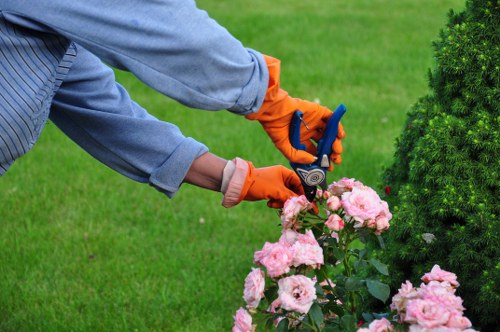 All operatives must be competent for the tasks assigned to them and must never use equipment they have not been trained to handle. Machinery such as strimmers, blowers, shredders, and cutting tools must be checked before use and maintained in good working order. Landscaping safety also depends on good housekeeping: paths should remain clear, waste should be stacked safely, and materials should not obstruct access routes. Particular care is required when handling thorny cuttings, broken branches, soil bags, and mixed green waste, as these can cause cuts, strains, or trips if not managed properly.
Risk assessments are carried out for all relevant work activities. These assessments consider site layout, public access, vehicle movement, weather conditions, overhead hazards, and the type of waste or materials being handled. If conditions change during a job, the team must stop and review the risks before continuing. This is especially important during wet weather, high winds, extreme heat, or when working near roads, walls, slopes, or fragile garden features. Good judgement is essential in every aspect of landscaper safety policy implementation.
Manual handling is a key concern in landscaping and rubbish clearance work. Staff are trained to lift with care, avoid overloading, and use mechanical aids where available. Heavy items such as soil, stones, planters, fencing offcuts, and waste bags should be moved using safe techniques to reduce the risk of back injuries and sprains. Team leaders must plan tasks so that no one is expected to carry unsafe loads alone. If a load is awkward, unstable, or too heavy, it must be split into smaller parts or moved with assistance. 
We also place strong emphasis on environmental and waste safety. Green waste, general rubbish, and recyclable materials should be separated wherever possible and loaded in a controlled manner. This supports safe working practices and helps reduce unnecessary contamination or spillage. Damaged containers, broken tools, and discarded sharp objects must be handled with care and disposed of correctly. A tidy site not only looks professional, it also lowers the chance of accidents for both workers and property users. In all rubbish company service area work, safety remains the first priority.
Public safety is an essential part of our policy. When working in shared spaces, staff must use warning signs, barriers, and clear communication to prevent unauthorised access to hazardous areas. Tools should never be left unattended where children, pets, or passers-by could reach them. Vehicles must be parked responsibly and loaded without blocking emergency access or pedestrian movement. Where work is carried out close to neighbours or shared boundaries, the team must act courteously and keep disruption to a minimum while still maintaining safe operations.
Employees are expected to report all accidents, near misses, injuries, and unsafe conditions as soon as possible. Recording incidents helps us identify patterns and improve our procedures over time. If an accident occurs, first aid must be given promptly by a trained person and, if necessary, emergency support must be contacted. No one should continue working if they are unwell, overly fatigued, or affected by medication, alcohol, or any substance that could impair judgement. Health and safety is a shared responsibility and relies on honest reporting and active cooperation. 
Training and supervision are central to our standards. New staff receive induction on safe working methods, emergency procedures, equipment use, and the correct handling of waste materials. Refresher training is provided when needed, especially after changes in processes, tools, or legal requirements. Supervisors must ensure that instructions are understood and followed, and that younger or less experienced workers are monitored appropriately. A strong safety culture supports consistency, professionalism, and long-term reliability in all landscaping and rubbish-related services.
 This policy is reviewed regularly to ensure it remains effective, practical, and aligned with current expectations for safe working. Any updates will be communicated to relevant staff and reflected in daily procedures. We are committed to continuous improvement, with the goal of preventing harm while delivering high-quality outdoor services. By maintaining safe habits, using the right equipment, and respecting every worksite, landscapers in Hampstead can carry out their duties efficiently and responsibly.
Ultimately, this policy applies to all activities undertaken by our team, including garden maintenance, site clearance, debris collection, and rubbish handling. Whether the job is large or small, the same principles apply: assess the risks, control the hazards, protect the public, and work safely. Through careful planning and disciplined practice, landscaping services can be delivered to a high standard without compromising health, welfare, or operational safety.

